
5 Best Ways to Hold a Newborn Baby
Today we will be telling you the 9 best ways to hold your child safely and comfortably in this you will discover expertly approved baby-holding techniques that will help you a lot as a parent.
It is a very great experience to hold a newborn baby but as a new parent, you must have a lot of questions that how to hold a newborn baby and whether you are doing it right or not. Fear not! This guide covers the 9 best ways to hold a newborn baby, Today we will ensure that you will learn how to hold your newborn baby which is safe and comfortable for both you and your child these techniques will help you feel confident and connected with your child.

Why Proper Baby-Holding Techniques Matter
Importance of Newborn Support (Head and Neck)
-Why is it important to support the head and neck of a newborn baby?
When a baby is born, the muscles of his neck are not yet strong enough, so he needs a little more support. If the baby does not get the right support on his neck and head, then his neck can get injured, which will cause a lot of trouble for the baby. Whenever you pick up your newborn, gently support his head and neck with your hands.
How Holding Affects Bonding and Baby’s Development
-How does holding a baby affect bonding and development?
When you pick up your child with love, he gets emotionally connected to you and this bonding is very important between you and your child. This is important for children to become emotionally and mentally strong and develop feelings. Giving skin-to-skin contact to the child makes him feel secure and loved, which boosts his brain development.
Preventing Discomfort and Injury
-How to protect the child from injury and discomfort?
If you hold the children in the right way, it gives them a comfortable and safe feeling, but if you are lifting them in the wrong way, it will provide them an uncomfortable feeling due to which they might start crying. That discomfort can also increase the pressure on their body which is not right. Therefore, holding them gently and securely is very important for their health and safety.
Preparing to Hold a Newborn Baby
1. Washing Hands and Maintaining Hygiene
The immune system of a newborn baby is very weak because its internal organs are not fully developed yet. So whenever you carry a newborn baby, you have to wash your hands properly before going near him or you can also use a sanitizer. These steps are necessary to avoid infections and germs.
2. Choosing a Comfortable Posture
It is very important to straighten your body posture before picking up a newborn baby. If you lose balance, keep your body straight or sit on a comfortable strong chair, keep your back and shoulders relaxed, and prepare your arms to support the baby properly.
3. Ensuring a Safe Environment
It is very important to check your surrounding area before picking up a newborn baby. You should not keep any dangerous sharp objects near you which can hurt children. These small things help in avoiding accidents.
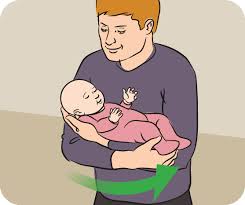
1.Cradle Hold (Classic Newborn Hold)
Best for: Everyday holding and comfort
Holding a newborn in a cradle is a great technique for holding your baby daily. It gives the baby a comfortable and secure feeling, which is also best for bonding.
How to do it: Step-by-step instructions
-Prepare your hands: Support the baby’s head and neck with one of your hands. Hold the baby’s waist and legs with the other hand.
-Gently pick up the baby: Carefully bring the baby towards your chest and hold his head with your hand or elbow.
-Create a comfortable position: The baby’s face should be towards you and his legs should be relaxed downwards.
Key benefits: Comfort and bonding
Comfort: The baby feels warm and secure, which can soothe him from crying.
Bonding: Your physical touch and eye contact create a strong emotional connection.
Breastfeeding Friendly: This hold is also ideal for breastfeeding, as the baby’s face is naturally directed towards the chest.
2. Shoulder Hold (Burping Position)
Best for: Burping After Feeding
It is very important to make your baby burp after feeding, so for that you have to position the baby on one of your shoulders and tap his back repeatedly. Holding the baby in this way improves his digestion and reduces the risk of gas build-up.
Correct Positioning Tips
Keep the baby on your shoulder very carefully. The baby’s belly and chest should be positioned on your shoulder. Rub his back lightly with one of your hands. Use the other hand to support his bottom. Make sure your posture is comfortable and straight.
Ensuring Baby’s Head Stability
The neck and head portion of a newborn baby is quite weak, so support them with one hand so that you can keep the baby away from any injury. The baby’s head should rest comfortably on your shoulder and your hand should be supporting behind his neck. This will keep your baby’s head stable and your son and you will remain confident and comfortable.
3. Football Hold (Tummy Support)
Best for Breastfeeding and Calming Colicky Babies
Football hold is one of the best positions for breastfeeding, especially when the baby has gas or some problems. In this position, the baby’s tummy rests on your arm, which can improve its digestion and help in releasing the gas. This hold is also helpful for those moms who find it difficult to support their baby properly while breastfeeding.
Proper Arm Placement
To do the football hold correctly:
–Sit in a comfortable chair and support your back.
–Baby’s body should be on your arm and his face should be towards your chest.
–Your hand should support the baby’s neck and head and the baby’s back should be above your forearm.
–Make sure that the baby’s tummy is touching your side and his legs are towards your backside.
Why This Works Well for Moms Recovering from C-sections
For moms recovering after a C-section, the football hold is a safe and comfortable option. In this position, the baby is not placed on your tummy, which does not put pressure on the surgical stitches. You can feed comfortably while sitting without any extra strain. This is a doctor-recommended breastfeeding position, especially when you need to hold your baby for long feeding sessions.
4. Lap Hold (Face-to-Face Bonding)
Best for Interactive Play and Bonding

The position you take for bonding with your child is to hold your baby in your lap and keep your child’s face and your face facing each other so you can talk to yourself and play with your baby. You can make eye contact with your baby, talk to him, and enjoy his cute reactions. This is a natural and lovely way to bond.
How to Hold Securely While Seated
To create this position, sit on a comfortable surface where you are comfortable and rest your feet on the ground, and support your back. Then gently place your baby in your lap, face to face. Support the baby’s back and neck with both hands. Make sure that the baby’s head does not tilt at any point.
When to Use This Position
Lap hold is best for those moments when you want to engage with your baby. This position is perfect for playtime after feeding, while singing lullabies, or for simple family bonding. It is better to try this when the baby is alert and in a happy mood so that both of you can enjoy this moment fully.
5. Hip Carry (For Older Newborns)
This is a technique that is perfect for older babies when their necks and hands come under head control. This carrying style is also convenient for parents and gives the baby a chance to explore the world!
1. When your baby is ready for hip carry
–You can try this carrying style when your baby is 6 months old because till then his neck and shoulders can give you some support, and then you can try hip carry.
–Yeah enjoy that your newborn can support his Mac, this is a very important milestone of motor development
2. How to support baby’s body
–Hold the bottom of the baby with one of your hands and make the baby rest snugly against your hip.
–Keep supporting the baby’s back with your other hand repeatedly when you are walking or doing some work together.
–Make sure the baby’s face is outward or on the side from where he can see the surroundings.
3. Benefits of Baby’s Hip Development
–The hip carry position supports the baby’s natural hip alignment, which is essential for healthy hip development.
–This method is specially recommended because the baby’s weight is distributed evenly and the hips are properly positioned.
–Plus, the bond between baby and parent becomes stronger because the baby stays close to the parent and enjoys the surroundings.
Conclusion:
Mastering how to hold your newborn baby can transform your parenting experience, helping your baby feel secure and loved. Practice these 9 best ways regularly, and soon, holding your baby will become second nature. Remember, confidence grows with experience! Happy bonding!