Baby’s First Foods 4-9 Months: A Complete Guide for Parents in 2025
Discover the best first foods for babies aged 4-9 months. Learn when and how to introduce solids, essential nutrition tips, and safe feeding practices to nurture your little one.
Starting solid food is a solid and exciting milestone that parents and babies both wait for are you wondering what will be your baby’s first solid food between the ages of 4 months and more today this guy will navigate you through the world of baby food—offering. Practical tips on when to start, what to feed, and how to ensure a safe and enjoyable experience for your baby. Let’s make this journey into solid foods as smooth as those first purees!
When to Start Solids: Signs Your Baby is Ready
Age Guidelines
Some babies start eating solids at 4 months and some babies start eating after 6 months. It depends on the speed of development of the baby. If you wait till 6 months then it is more recommended because by then the digestive system of the baby is developed and becomes strong. But if your baby is showing early signs then you can consult your pediatrician and start solid food at 4 months.
Developmental Readiness
These are some signs that show that your baby is ready to eat solids:
Sitting up: If your baby has started sitting without support, then this is a very good sign.
Loss of tongue-thrust reflex: In this reflex, the baby pushes the food out with his tongue and when this reflex starts to decrease, then it means that the baby is now ready to swal
low solid food
Interest in food: If you see that your baby is looking toward the food on your plate or is trying to catch the food, then this is another indication that his interest in solids is increasing.
Importance of Consulting Your Pediatrician
If you want to start solid food for your baby, then consult your doctor first because every child has a different growth rate, so the doctor will guide you well as to what is right for your wife. This ensures that introducing solids is safe and effective for your baby.
Best First Foods for Babies: A Nutritional Breakdown
The first solid food for a newborn is very important, so we have to give it a lot of thought. This guide will tell you which foods contain important nutrients for babies and should be given to them.
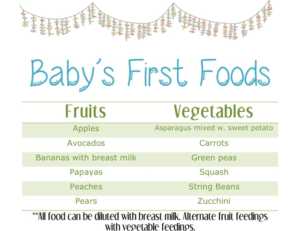
1. Single-Ingredient Purees: Examples like Rice Cereal, Sweet Potato, and Avocado
You should first focus on single ingredients and start with their purees. This means that you should start by focusing on only one food at a time.
Rice cereal: It is easily digestible and is fortified with iron, which is important for a baby’s development.
Sweet potato: These are naturally sweet and rich in fiber and vitamins (like Vitamin A).
Avocado: These are a good source of healthy fats that are important for a baby’s brain development.
The advantage of single-ingredient purees is that if the baby is allergic to a food, it will help you easily identify it.
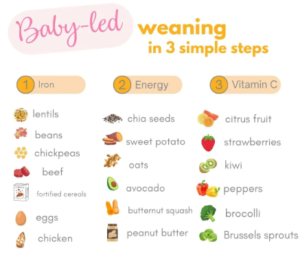
2. Iron-Rich Foods: The Importance of Fortified Cereals, Lentils, and Pureed Meats
Iron is very important for newborns, so we start taking iron supplements especially when they are 6 months old, as their iron stores start to deplete.
–Fortified cereals: Like iron-enriched rice or oat cereal, these are a perfect start for babies.
–Lentils (lentils): These are a natural source of iron and protein and are easily digestible.
–Pureed meats: If you can offer non-vegetarian options, pureed chicken or mutton also contain a lot of iron.
–Iron-rich foods help them make blood cells and develop overall growth.
3. Fruits and Vegetables to Try: Banana, Carrot, and Squash
You can add varieties to your babies’ meals by including fruits and vegetables and their taste is also quite mild, which babies like naturally.
Banana: It is easily mashed and is full of potassium, fiber, and natural sweetness.
Carrot: After steaming, boiling, and mashing, carrots become a good Vitamin A and beta-carotene source.
Squash: It is a nutritious choice with a soft texture and sweet flavor, which is perfect for children.
While introducing fruits and veggies, make sure you are giving them in puree or mash form so that the baby can eat them easily.
4. Avoiding Salt, Sugar, and Allergens Initially (or Introducing Allergens Safely Based on Guidelines)
In the early stage of childhood, you should avoid salt and sugar:
Salt: Baby’s kidneys are not fully developed yet, so it is difficult for them to process salt.
Sugar: Excess sugar can lead to unhealthy eating habits in the future.
How to Introduce Solid Foods Safely
1. Step-by-step process: From spoon-feeding to baby-led weaning options
When you are introducing solids to your baby, both methods are popular—spoon-feeding and baby-led weaning.
Spoon-feeding: In this method, you feed your baby with a spoon that contains mashed fruits or first vegetables. This method is simple and quite controlled. Parents do not face many problems in this and this method is quite used.
Baby-led weaning (BLW): In this, the baby is left independent and is allowed to explore soft finger food with his hands. In this, the baby’s motor skills develop due to the third m
ethod. We can also mix both methods which will help you in understanding the baby’s health. Do the best things for the baby that you can use.

2. Starting with small portions and gradually increasing quantity
Whenever you are starting to feed the baby, start with small portions which will be easy for the baby As the appetite of the baby increases you can increase the portion size.
-First one or two meals can be of solid foods.
-Then after 7-9 months you can increase to teen meals.
-Always keep in mind that portion size is of solids Also gradually adjust the quantity of breast milk or formula, as they are still the main nutrition source for the baby.
Foods to Avoid for Babies 4-9 Months
It is very important to eat healthy food for your baby but it is also important to avoid some things, as we will tell you in this blog which food should be avoided by your newborn baby and why
1. Honey, Cow’s Milk (as a drink), and Choking Hazards like Whole Nuts or Hard Pieces of Food
Honey: Babies should be kept away from honey for at least 1 year because it has the risk of Clostridium botulinum bacteria, which can damage the digestive system of small children or cause FIR and it can cause serious conditions like botulism in children
Cow’s Milk: Babies should be kept away from cow milk for one year Nuts should be avoided as they put a strain on the kidneys of children and can deprive them of proper nutrition such as iron, which increases the risk of anemia.
Choking Hazards: Whole nuts, hard candies, or hard fruits/vegetables pose a choking risk for children. Always ensure that food is served in a puree or soft consistency.
2. High-Sodium and High-Sugar Foods: Why these are not for children

High-Sodium Foods:
For small children, items like packaged food, chips, and processed food are not good because they contain high amounts of sodium. The immature kidneys of babies are not fully developed to process it. This can cause health issues for children. It is best practice to avoid salt in homemade baby food.
High-Sugar Foods:
Sweet chocolates or other sweet products which have high sugar content are harmful to babies. It not only increases taste buds but can also cause obesity and other problems in the future.
3. How to Avoid Unsafe Preparation Methods and Feeding Pitfalls
Eating raw: Wash fruits and vegetables thoroughly and steam/puree them so that germs are removed.
Uncooked eggs and undercooked meat: These carry the risk of salmonella and other bacterial infections, which can be dangerous for a baby’s health.
Overfeeding or Force-Feeding: Always feed children according to their hunger cues. Force-feeding can be uncomfortable for the baby and create mealtime stress.
Microwave Use: Reheating baby food in the microwave causes uneven heating, which can cause mouth burns. Always stir well and check the temperature before serving.
Building a Balanced Feeding Schedule
1. Sample Feeding Schedules for Babies 4-6 Months vs. 7-9 Months
–When your baby is about to start solid food, it is important to understand his feeding schedule because for four to five months the child drinks only breast milk and formula milk and solid food still acts as a complementary food for him, so you should start with one or two small meals in the beginning, like one spoon of rice cereal or mashed fruits.
–A 7 to 8-month-old baby becomes a little mature and his digestive system improves, so you can add two to three meals to him. At this stage, you can introduce your baby to different food groups such as fruits, vegetables, and protein sources such as lentils. An example schedule for this could be:
Morning: Breastmilk/formula and a small puree (like banana or carrot).
Evening: Breastmilk/formula and a small snack (like semolina kheer or boiled potato).
2. Balancing Solids with Breastmilk or Formula: Ensuring Your Baby Gets the Right Nutrients
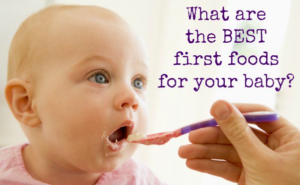
When introducing solids, it is important to remember that breastmilk or formula is the baby’s primary source of nutrition for up to 1 year. Solids are only for additional nutrition. Giving breast milk or formula in between or with each meal ensures that the baby is getting the nutrients needed for growth.
Conclusion:
Baby’s first eating journey can be an exciting and slightly challenging phase, but if you introduce solids at the right time and with balance, it can be an enjoyable experience for both you and your baby! It is important to introduce solids carefully between 4-9 months so that your baby gets the essential nutrients and his growth remains healthy. Remember, balancing breast milk or formula with solids, and understanding the baby’s hunger cues, are essential. Every baby has its own rhythm, so you will have to adjust the feeding schedule according to your baby’s routine.
Your baby is a learning experience for you, and this feeding schedule process is also a step-by-step journey. So, enjoy feeding time while understanding your baby’s needs, and remember—the most important thing for your baby is your love and attention! Keep feeding with love and patience, and your little one will thrive with every bite!