Setting Healthy Boundaries for Children
It is very important to set healthy boundaries for children. This guide on how to set them will help you teach your children respect, independence, and emotional growth without being a strict parent.
Why parents should set boundaries is something that is on every parent’s mind, but a parent needs to become a loving parent to take care of their child so that he or she can live well in his or her life. However, these guidelines teach parents responsibility and make them self-reliant. But the question is how to balance both of these. How to be firm while being supportive? In this guide, we’ll give you simple and actionable tips to set healthy boundaries for your kids. So let’s get started, without any strict rule-following!
What Are Healthy Boundaries for Children?
We should set a healthy boundary for children. We should use new techniques so that children also feel like learning something. We should teach them not one thing every day. We should teach them something healthy. But parents are always confused about what we should do. So we will discuss this topic in detail.
Definition of Healthy Boundaries in Parenting
Healthy boundaries mean supporting them in developing them. Set a boundary so that we can see their boundary and they are doing something within that boundary.
For example:
“You will share your toys with your friends.”
“You cannot watch TV during dinner time.”
The meaning of boundary is not whether you should control him but that he should also care for others, he should als
o do things for others that make others happy like sharing toys, sharing food, coloring together, and playing together. This teaches children to manage emotions, learns to develop patience, and tells them what responsibility is.
When a healthy boundary is set, trust is built. Children emotionally know what is
acceptable for them and what is not acceptable. Childr
en also know what they should expect and what they should not. This is their emotional development.
Importance of Setting Age-Appropriate Boundaries
We need to set boundaries according to the age of the children so that they understand what is expected of them. Boundaries should be different for each age group.
–Toddlers (1-3 years): Young children need clear and simple boundaries, such as “No, this is dangerous” or “Climbing on the table is not allowed.”
–Preschoolers (3-5 years): Children of this age need a little more explanation. Such as “It is important to clean your toys because this way the house will remain clean.”
–Teenagers (13+ years): As kids get older, they need personal space and autonomy. So boundaries should be set while respecting their privacy, such as “You can use your phone, but not during dinner.”
If boundaries are not age-appropriate, they will either get confused or ignore them. The Difference Between Boundaries and Rules Many parents understand boundaries and rules to be the same, but there is a difference. Boundaries:
Boundaries mean keeping children within limits so that we can understand how their behavior impacts their lives and the
lives of others. This also hinders children’s emotional growth and self-control.
Example: “You have to learn to control your emotions. If you are angry, it is important to talk, not to scream.”
Rules:
Rules are pacific guidelines that tell us what is right and what is wrong. If we break the rules, it will be a wrong thing which will have consequences in the future.
Example: “You can use the phone only after your homework is over.”
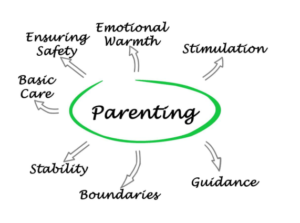
Why Are Boundaries Important for a Child’s Development?
When we set boundaries for our children, we are in the process of strengthening our children’s future strong personality, behavior, and emotional growth.
By setting boundaries, they do not learn to follow rules, they build a balance, respect, and discipline in their lives which is very important and it is lifelong. The points given below explain the importance of boundaries in detail.
1. Builds Emotional Security and Self-Discipline
Setting boundaries in children’s lives means that they know what is allowed and what is not. When children get clarity, they start feeling emotionally and socially secure. This security helps them handle stressful situations and boosts their confidence.
Through setting boundaries, we also teach children that there is a right time for every work, which also has a result. For example, if you set a boundary for your child that “you can watch TV for only one hour”, then he will learn to manage his time. This self-discipline is very important
for his future life.
Tips for Parents:
-Be consistent while setting boundaries.
-Appreciate the positive behavior of children.
-Explain every boundary lovingly, so that it does not seem like a strict rule.

2. Fosters Respect for Self and Others
Setting boundaries does not only mean following rules. It also teaches children self-respect and empathy which are important for life. When you set boundaries with your child – such as “It is important to respect others’ personal space”
This teaches children to strike a balance between their own needs and those of others. With this discipline, children not only learn to respect at home, but also display respectful behavior outside among friends, teachers, in the community, and everywhere.
Tips for Parents:
-Model respect through your actions.
-Teach children that “No” is a valid answer, whether it is from them or others.
-Involve them in activities that develop empathy, such as story-telling and role play.
3. Encourages Independence and Decision-Making Skills
Setting Boundaries Many parents feel that they are imposing a lot of restrictions on children, but through this process, children improve their independence and decision-making. When a child stays within boundaries and explains his decisions and choices, he learns from his mistakes and makes his decisions thoughtfully.
Types of Boundaries to Set for Children
For the development of children, you need to set boundaries. Due to the help of setting boundaries, children get help in growth in all these areas like emotional physical, psychological, and cognitive behavior. Let us understand these types of boundaries in detail:
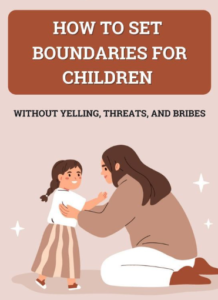
Physical Boundaries: Teaching Kids About Personal Space and Consent
By setting boundaries, we teach children that people have a personal space, their own as well as others. By setting boundaries, we teach children that it is wrong to touch an unknown thing without permission. These boundaries are necessary for their safety and self-respect.
How to teach:
– Explain to children about “good touch” and “bad touch”.
-Teach them that if someone enters their personal space without their permission, they can say “No”.
-Parents themselves should also respect their personal space, such as taking their
permission when entering their room or hugging them.
Emotional Boundaries: Helping Children Express Their Feelings Respectfully
Through emotional boundaries, we teach children how to express their emotions without hurting anyone. These boundaries help children understand their feelings, control them, and express them.
How to teach:
-Teach children to express their emotions positively. For example, “I am angry because…” or “I felt bad when…”.
-Teach them that it is wrong to suppress their emotions, but it is also wrong to yell at or hurt someone.
-Try to understand their point of view while talking to them to develop empathy and understanding.
Time Boundaries: Creating Routines for Play, Study, and Screen Time
Setting the boundaries of a timetable provides children with a daily routine that develops discipline when followed. These boundaries teach them time management and increase their productivity.
How to teach:
-Create a fixed routine for children that has a fixed time for every activity, such as study time, playtime, and bedtime.
-Set specific rules for screen time. For example, “1 hour of TV watching is allowed, but only after completing homework.”
-Explain to them the importance of time and how to follow discipline.
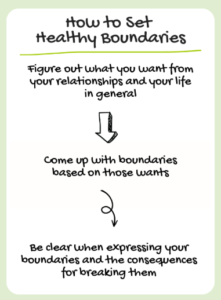
How to Set Healthy Boundaries Without Being Too Strict
While setting boundaries with children, it is important to keep in mind that we are not being too strict on the UN. If we are too strict, children can become rebellious or feel emotionally distinct. Therefore, it is important that you set boundaries with empathy and love so that children get a supported feeling that makes them comfortable.
Let us now discuss some important points in detail that will help you set healthy boundaries, without being too strict.
1. The Importance of Communication and Empathy
When we set any boundaries, it is very important to have communication in it. It is not that w
e just set the boundaries, impose rules, and do not talk about it. We need to make the children understand why these rules are being set and what is the reason behind them.
What should be done:
-Talk to the children calmly, and try to understand their emotions.
-When you deny permission for something, then definitely tell the reason. For example: “I can’t let you watch TV right now because it’s time to sleep. If I sleep well, I’ll have more energy tomorrow.”
2. Using Positive Reinforcement Instead of Punishment
When we become too strict with children and start punishing them, due to punishment, we do not get good long-term results and the children come under temporary control. Instead of this, you should use positive reinforcement with children.
What is Positive Reinforcement?
Positive reinforcement means that when children show good behavior, we should present them gifts or FIRs and you should encourage them so that they will show the same behavior again.
Examples of Positive Reinforcement:
-If the child takes his toys in the same way, then praise him: “Wow! You did suc
h a good job putting your toys together. I’m so proud of you!”
-You can give them small rewards for following the routine, like telling them a favorite bedtime story or giving them their favorite snack.
Negative Effects of Punishment:
-Punishment can make a child develop fear.
-It can hurt their self-esteem.
-Children start thinking that you are strict or unfair.
Benefits of Positive Reinforcement:
-Children’s behavior improves naturally.
-Children think of boundaries as part of their self-discipline.
-The relationship remains positive and healthy.

3. Being Consistent and Clear with Expectations
Setting boundaries with children is beneficial only when you consistently follow them and set clear expectations. If you sometimes accept a rule and sometimes refuse it, children will get confused about whether they have to follow it or not.
Why is Consistency Important?
-When you are consistent, children know what is expected of them.
-It provides them with routine and structure, which is important for their mental and emotional development.
Why is Clarity Important?
-Unless you are clear, children can misunderstand boundaries.
-For example, if you said “Screen time is only 1 hour”, then implement that consistently. If you sometimes allow 1 hour and sometimes 2-3 hours, then the boundaries become ineffective.
Types of Boundaries to Set for Children
Teaching children their boundary is an important task of painting. This boundary makes them safe and independent. Now I will tell you about 4 types of boundaries that you would like to know – Physical Boundaries, Emotional Boundaries, Time Boundaries, and Behavioral Boundaries. Let us understand them in detail:
1. Physical Boundaries: Teaching Kids About Personal Space and Consent
Physical boundaries mean respecting one’s own body and understanding the importance of its safety. It is important to teach children from the very beginning what their personal space is and why it is important and that children should respect it.
How to teach:
-Explain Personal Space: Tell children that every person has a personal bubble, which should not be entered without permission.
-Introduce the concept of Consent: Teach them that if they want to hug or kiss someone, they must first take permission from them. Learn to hear “No” and respect it.
-Set body safety rules: explain the difference between good touch and bad touch in simple language. This is very important for their safety.
2. Emotional Boundaries: Helping Children Express Their Feelings Respectfully
Emotional boundaries mean that children should be able to recognize their emotions and respect them so that they express them in a healthy way. Children who express their feelings in a good way by understanding them are able to control their emotions and are emotionally strong.
How to teach:
-Teach to name feelings: When children feel anger, sadness, or happiness, teach them to verbalize those feelings. For example, “I am feeling sad” or “I am angry.”
-Develop empathy: Teach children the importance of understanding the emotions of others. Teach them how to respond when someone is upset.
-Set boundaries: Tell them that it is wrong to say hurtful words, shout or commit physical violence against someone. It is important to keep your word in a respectful manner.
3. Time Boundaries: Creating Routines for Play, Study, and Screen Time
Time boundaries means using and managing time effectively and well. Creating a balanced routine in your life teaches discipline and helps children in their overall development.
How to teach:
-Create a routine: Set a fixed routine every day that balances play time, study time, and screen time.
-Screen Time Boundaries: It is important to limit screen time for children of all ages. For example, for toddlers it should not exceed 30-60 minutes.
-Time Management Skills: Teach them the importance of time, and how to prioritize their work.
4. Behavioral Boundaries: Teaching Right from Wrong and Setting Consequences
Behavior boundaries mean that children know the difference between right and wrong and know how they are behaving at a particular place. These boundaries teach children the lesson of discipline and responsibility.
How to teach:
-Make clear rules: Set some basic rules inside the house, such as “clean up your toys,” “talk politely to others,” and “sharing is important.”
-Set consequences: Every action has consequences. If the child makes a mistake, politely tell them what the consequences will be. For example, if they do not complete their homework, play time will be reduced.
-Use positive reinforcement: Instead of just punishing for mistakes, it is also important to praise for good behavior. This encourages them.
Conclusion:
Setting healthy boundaries for children may seem challenging at first, but it’s a critical part of raising respectful, confident, and emotionally secure kids. Remember, boundaries aren’t about control — they’re about guiding your child to become a responsible, well-adjusted adult. Start small, be consistent, and always approach boundary-setting with love and empathy. The results will be well worth it!