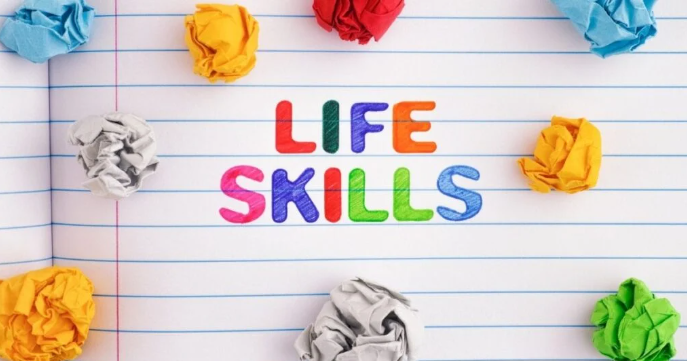
7 Practical skills every child needs to succeed
It is significant to educate kids on these 7 useful skills since childhood that can make them successful in their lives! Have a look at this guide to understand how to build skills such as problem-solving, communication, and emotional intelligence.
All parents wish for their children to be successful, self-assured, and self-sufficient. But studies aren’t sufficient, they must also learn survival skills that will serve them in all walks of life. Problem-solving, communication, and self-confidence will assist them to go further not only in education but also in relationships as well as careers.
In this article, we will discuss 7 useful skills that every child must learn, and how you as a parent can help develop them in your children. Let’s begin!
1. Critical Thinking & Problem-Solving
Developing critical thinking and problem-solving skills in childhood is of great importance. Not only does it assist one to excel at school, but it also assists one in overcoming actual life difficulties.
1.1. Why Problem-Solving is Important to Excel at School & Life
Self-Confidence Develops – As kids begin to look for solutions themselves, their ability to think as well as confidence increases.
Better Decision Making – Through the development of problem-solving abilities, children begin to think rationally in all matters and can make better decisions.
Academic Improvement – Problem-solving abilities benefit greatly in mathematics, science, and reasoning subjects.
One can easily deal with life problems – these abilities prove beneficial not only in academics but also in day-to-day problems of life and social interactions.
1.2. Simple Activities to Develop Logical Reasoning in Kids
Let them play puzzles and brain teasers – Jigsaw puzzles, Sudoku, Rubik’s cube, and logical reasoning games sharpen the intellectual powers of children.
Storytelling and “What Happens Next?” Game – Narrate a story and let children decide what could be the next scene. This enhances their imagination and reasoning.
Role-Playing Games – Prepare different situations and prompt children for answers such as “If you are a shop owner, how do you deal with a customer problem?”
Provide Every Day Problem-Solving Opportunities – Request them for answers to everyday domestic difficulties such as “If there isn’t enough room in the refrigerator, how do you stack up the items?”
Building Blocks and STEM Games – Constructing imaginative buildings from Lego or blocks enhances logical thought.
1.3. Stimulating Curiosity and Creative Thinking
Answer their questions thoughtfully – If the kid is curious about something, reply logically and patiently.
Ask them Open-Ended Questions – Such questions that one cannot answer using only “Yes” or “No”, like “If you were a scientist, what new invention would you make?”
Involve them in creative work – Painting, storytelling, music, and handwork activities improve children’s creative thinking.
Offer new experiences – Take them to museums, science centers, and walks in nature to discover new ideas.
Give them space for autonomous decision-making – ask them questions about small things, such as “What are you in the mood to eat today and why?”
If you train critical thinking and problem-solving abilities in children at a young age, they will be more independent and assertive in later life.
2. Communication Skills
The importance of effective verbal and non-verbal communication:
Effective verbal communication is communicating what you intend to communicate clearly and correctly so that others can hear it. The use of the correct words and the voice tone are crucial.
Non-verbal language like body language (hand, eye contact), facial expression (face expression), and stance (way of sitting) also carry great importance. They express much without actually expressing anything and can reinforce or deny the oral message.
If both verbal and non-verbal language work hand-in-hand, it becomes easier and the risk of misunderstanding lessens.
How to teach kids to communicate effectively:
-Make the child speak out loud about their ideas and emotions. Ask them a question such as “How are you feeling?” or “What are you thinking?”
-Teach them new terms and phrases. Read to and talk about a story with them.
-Provide a secure and welcoming environment where the child can give their opinion without fear of criticism.
-Encourage them to gain knowledge on communicating in various settings.
-Educate them on how to organize their conversation, how to initiate it, what to utter in between, and how to conclude it.
The significance of listening actively and empathy:
Listening actively is paying a high degree of attention to what the other person is communicating, not merely listening but comprehending as well. This entails maintaining eye contact, muttering “yes” or “good” in between, and posing questions to clarify.
-Empathy is feeling and understanding what the other person is going through, for instance, if they hurt, then you hurt as well.
-By active listening and empathy, the other person gets a sense that you care for them and that you value their words.
-This aids in developing good relationships and enhances communication as people feel more free and at ease.
3 Emotional Intelligence & Self-Regulation in Children
It is highly essential to build up emotional intelligence and self-regulation from childhood itself. These enable children to know, manage their emotions, and tackle challenging situations. The following points will describe this subject in detail.
1. Recognizing and regulating emotions
-It is essential to educate children to be able to recognize and express their emotions. Once they know their emotions, they can regulate them more effectively as well.
-Parents and teachers must have open discussions so that children gain the confidence to express their feelings.
-Tell them in simple language and day-to-day examples that feelings such as happiness, sad, anger, and frustrated are normal and everyone feels them.
2. Teach Resilience, Patience, and Self-Control
-Resilience (sustained effort) – Educate kids that it is necessary to continue learning and proceed despite each failure. Help them resolve little issues so that their confidence level rises.
-Patience (slow reflection and comprehension) – In the present fast life, children become accustomed to instant gratification (everything must be done instantly). Educate them to cultivate patience by means of waiting games or turn-taking activities.
-Self-control (controlling your emotions) – When the child is angry or upset, teach him deep breathing exercises and counting techniques so that he can control his feelings.
3. Simple ways to handle stress and frustration
Calm-down techniques – Teach children to take deep breaths, drink water, or count to 10 whenever they feel stressed or frustrated.
Use art and writing – Some kids struggle to put their feelings into words. Coloring, drawing, or writing can assist them in communicating their feelings more effectively.
Physical exercise – Outdoor play, yoga, or even simple exercises can help reduce stress and improve their mood.
Build positive self-talk – Teach kids to use good affirmations over negative thoughts like “I can do this” or “I need to practice and I’ll improve.”
4. Time Management & Organization
Why time management is a key to success (Time management is the key to success):
-Time is the most valuable resource, and mastering it is extremely important.
-Effective time management enables you to achieve your goals.
-Being organized reduces your stress and makes you more efficient.
-Time management makes you concentrate on your key work and avoids time wastage.
-It boosts your overall productivity, enabling you to accomplish more.
Educating children to set goals and prioritize:
-Teach them to set little and realistic goals.
-Assist them in putting their goals in writing so they can see them in front of them.
-Sort out duties into urgent and important priorities.
-Instruct them to create a to-do list and stick to it.
-Tell them which work should be done first since it is important.
Fun games to enhance organizational life skills:
-Instruct them to sort out their toys and books on a routine basis and turn them into a game.
-Show them how to check their school bag each evening and prepare it for the following day. (Show them how to check their school bag each -evening and prepare it for the following day.)
-Make a family calendar and put significant dates and activities on it.
-Show them how to fold their clothes and arrange them neatly in their cupboard.
-Educate them to put a time limit on the completion of minor tasks, such as solving a puzzle or getting into bed.
Financial Literacy & Money Management for Children
Learning about financial literacy from an early age is a valuable skill that makes kids independent and accountable. As soon as children begin to comprehend money’s value, budgeting, and savings, their financial choices become all the more intelligent when they become adults. In this article, we will be explaining how financial literacy can be imparted to kids.
1. Why should kids be provided with an understanding of money?
Early Learning, Good Habits – If money is educated about its right usage since childhood, it becomes simple to become financially secure later.
Preparation for Financial Freedom – If children learn how to earn, save, and spend money, they can make independent choices later.
Avoiding Impulse Purchases – If children learn the need for budgeting and savings, they can resist impulse purchases.
Preparing for Real-Life Issues – Financial literacy is not knowledge of money, but the ability to comprehend real-life financial issues and solve them.
2. How to educate Saving, Budgeting, and Wise Spending?
Educate the proper use of pocket money – Provide them with pocket money monthly or weekly and instruct them on how to spend it wisely and realize the value of savings.
Explain needs vs wants – Inform children that not everything is a need. Educate them to identify the difference between something being a need and something merely being a want.
Use a piggy bank – Provide children with a piggy bank or a clear jar and instill in them the practice of small savings.
Introduce the idea of budgeting – They must make it a habit to note down their expenditure and savings on a plain notebook or app.
Involve them in shopping – Wherever you shop for groceries or anything else, inculcate price comparison and budgeting in children.

3. Age-Specific Activities to Inculcate Financial Responsibility
4-6 Years: Acquire the use of a piggy bank and the idea of saving small items.
7-9 Years: Practice pocket money management and learn about saving to purchase small items.
10-12 Years: Basic budgeting and saving for goals like putting away money to purchase a toy or a book.
13+ Years: Discussing the need for bank accounts, learning digital payments, and everyday expenses.
6. Social Skills & Teamwork
Teaching cooperation, sharing, and teamwork to children right from childhood is extremely crucial for their overall growth. These aspects enable them to form relationships, resolve conflicts, and become good human beings. Let us know about these three crucial points in detail.
1. Significance of Cooperation, Sharing and Teamwork
Cooperation is not just doing things in a team, but also resolving problems in a team and assisting others.
-The sharing mentality should be introduced from early childhood so that the children learn not to be selfish and also observe other people’s needs.
-Teamwork helps children understand team spirit and co-problem-solving, which will benefit them in future professions and their personal lives.
-Such habits can be instilled in the children through games involving groups of children, role plays, and artwork.
2. Help them become friends and resolve conflicts
Each child is a natural friend-maker, but healthy friendships take practice.
-By learning communication skills, children learn to communicate their feelings, and this minimizes misunderstandings.
-Conflict resolution needs to be taught so that children can end fights or misunderstandings amicably.
-Parents and teachers can foster these skills by teaching patience, active listening, and apologizing.
3. Importance of Kindness, Respect and Inclusivity
Kindness is not just a gesture, it is a mindset. When children learn small good manners like saying ‘thank you’ and ‘sorry’, their emotional intelligence becomes stronger.
-Giving and receiving respect are both important. Children should be taught to listen to everyone, respect opinions, and respect elders.
-Inclusivity means accepting everyone – even if they are from a different culture, disability, or background. Developing this habit from childhood makes children open-minded.
-Parents and schools can encourage inclusivity by initiating small activities like storytelling, discussions, and group activities on diversity.

7. Self-Confidence & Decision-Making
What is the effect of self-confidence on achievement: When children are self-confident, they do not hesitate to attempt something new. They believe in themselves and their potential, which enables them to overcome even challenging circumstances. Even when they fail, they learn and proceed further. Self-confident children are more autonomous and driven, which enables them to achieve academic and life success.
How to get children to trust their gut and make healthy choices: Ask children to pay attention to their feelings and instincts. Discuss their choices with them and teach them about the outcomes of their decisions. Allow them to have small choices, such as choosing what to play with or what clothes to wear. Commend them when they make healthy choices.
Overcome the fear of failure among children: Let the children realize that failure is the way life works and everybody fails at some time or another. Inform them that learning from failure is an integral step in personal growth. If they fail, encourage them and value their attempt, not the outcome. Also, inform them that even seniors have been unsuccessful in their lives and they have learned from them and have succeeded. Provide them with a secure environment where they can experiment without fear.
Conclusion
Success isn’t just about grades—it’s about lifelong skills that help children navigate the world with confidence. By fostering these 7 practical skills, you’re giving your child the tools they need to thrive in school, relationships, and their future careers. Start small, be consistent, and watch your child grow into a capable, self-assured individual!
Call to Action:
What skill do you think is the most important for kids? Share your thoughts in the comments below!