Understanding Babies’ Digestive System at 2-8 Months: What Every Parent Needs to Know
How does the digestive system of a baby between 2-8 months develop? Know common tummy problems, when to introduce solids, and the best digestion tips
Do you know that the digestive system of a newborn baby doesn’t fully develop? And when the baby is between 2 to 8 months old, his tummy goes through new changes each day!
This is the period when the baby transitions from breast milk or formula to solids, and also the digestive system slowly matures. For this period, gas, constipation, and reflux are experienced — but do not worry! If you know a little bit about how the baby’s digestive system functions, then you can assist in keeping their tummy healthy.
In this blog we will discuss:
-Baby’s digestion development step-by-step
-Increases in common digestive issues and remedies
-Safe time to initiate solids and safe foods
-Natural cures that calm baby’s tummy
-So let’s begin with an easy-to-follow and parent-oriented guide!
How the Digestive System Develops from Birth to 8 Months
Overview of gastrointestinal development after birth
The digestive system of the baby is not developed at birth. For a few months, the stomach of the baby can digest breast milk or formula milk alone. Newborns’ gastrointestinal tract (GI tract) matures slowly in which each component—like the stomach, intestines, and liver—learns to do its job well.
During the first few weeks, the gut barrier of the baby is also forming, through which it becomes easy to absorb nutrients and gain protection against harmful bacteria. That’s why only mother’s milk is the best after birth, as it is easily absorbed and also gives immunity.
What happens between 2 and 8 months
-Between 2 to 8 months, the digestive organs of the baby slowly begin to mature. At this time:
-Enzymes begin to develop that digest carbohydrates, proteins, and fats.
-Gut lining becomes thick which aids in improved absorption of nutrients.
-Baby’s liver and pancreas also begin functioning properly.
-Between 4-6 months, the baby is ready to take solids, as its gut has now matured slightly.
When digestive enzymes start maturing
Digestive enzymes develop slowly after the birth of the baby. For instance:
-Lactase enzyme is formed at birth and gets destroyed by milk sugar (lactose).
-Amylase enzyme forms between 3-6 months and is responsible for the digestion of starch (such as daily, rice).
-Protease and lipase enzymes, which are responsible for the digestion of proteins and fats, also develop gradually.
-Therefore, only milk (breast/formula) is appropriate for the infant for the initial months. Until the time the enzymes are not well-matured, there may be difficulty in the digestion of solids.
The function of gut flora (microbiome) in digestion
Gut microbiome or gut flora refers to the beneficial bacteria residing within the baby’s intestines. Gut bacteria play an extremely vital part in digestion:
-They contribute to the uptake of nutrients.
-They aid in developing the immune system.
-They guard the body from harmful bacteria.
-They even affect the baby’s mood and general well-being (gut-brain relationship).
Key Digestive Milestones by Age Range
2-3 Months: Immature Gut and Colic Signs
The digestive system of the baby at this age is still developing. Their gut is immature, and because of this, they experience issues such as gas, bloating, and colic. Colic refers to inappropriate crying without any apparent reason, most often in the evenings.
-Parents must remember at this age that:
-Baby must be burped regularly after feedings
-Overfeeding must be avoided
-Breastfeeding women should refrain from gas-forming foods in their diet (such as cabbage, pulses, etc.)
-This phase can be slightly troublesome, but symptoms can be controlled with good care.
4-6 Months: Introduction of Solids and Readiness Signs
At this age, some babies appear ready for solids, but not everyone. Breast milk or formula is adequate for 6 months as per WHO. But if the baby is partially ready, solids may be introduced.

Readiness signs are:
-Baby can manage his head
-When the baby becomes interested in eating (like moving his mouth after seeing your food)
-Taking a small amount of food from a spoon, and not much tongue-thrust reflex
-The digestive system is gradually accepting solids now, but the introduction must be gradual and straightforward—one food at a time.
7-8 Months: Enhanced Enzyme Function and Nutrient Absorption
At this age, the digestive enzymes of the baby mature. Now they are capable of digesting foods like pureed fruits, boiled vegetables, and soft cereals. The body’s need for iron and other nutrients also rises, so iron-rich foods should be introduced.
At this age:
-Baby may have 2-3 solid foods in addition to breast milk
-Protein-rich and fiber-rich foods can be introduced into the diet gradually
-Baby’s stool (potty) may be slightly solid and there may be color variations (which is typical)
Changes in Bowel Movements by Age
-Baby’s potty habits vary by age and diet.
-0-3 months: Breast-fed babies’ potty is softer and yellowish. Formula-fed babies’ potty is slightly thicker and stinky.
-4-6 months: After solids begin, the potty texture and smell vary.
-7-8 months: Stooling becomes firmer, occasionally occasional constipation will also occur during the introduction of new foods.
Common Digestive Issues in Babies (2-8 Months)
Gas and bloating
The digestive system of infants from 2-8 months is not yet mature, and therefore gas and bloating are very common issues. When the baby eats, he swallows air as well, which results in gas. This tightens the tummy of the baby, makes him irritable, and sometimes he doesn’t sleep the whole night. Burping and correct feeding position can help prevent gas.
Constipation and irregular poop
Constipation or abnormal poop patterns are also observed in babies of this age group, particularly when solid foods are introduced. If the baby doesn’t poop for days, or if the poop is dry and hard, then it is constipation. Breastfed babies poop slightly delayed, which is normal, but if the baby is uncomfortable or strains, he might have a digestive problem. Purees with fiber such as papaya and pear and adequate hydration are beneficial.
Acid reflux (GERD)
The lower esophageal sphincter of the baby is not yet fully developed, and therefore some infants experience acid reflux or GERD. During this condition, the feed of the baby repeatedly comes out of the mouth, or he experiences discomfort after feeding. Frequent spit-ups, crying while feeding, and failure to gain weight are typical symptoms. Upright feeding and small feed portions are supportive.
Diarrhea and lactose sensitivity
Frequent watery stools, particularly if the odor is off or with rash, may be diarrhea. Lactose sensitivity at times can also be a reason for diarrhea, particularly if the baby is on cow milk formula. It is essential to keep breastfeeding, stay hydrated, and see a doctor if diarrhea persists for more than 1-2 days.
Best Foods to Support Digestion During Weaning
Best first foods for easy digestion
When the baby is 6 months old, his digestive system begins to digest solid foods gradually. During this period, foods should be introduced that are soft, simple, and easily digestible.
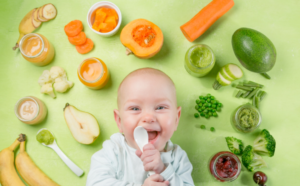
-Mashed banana – soft with natural sweetness
-Steamed and mashed carrots or pumpkin – light and gut-friendly
-Rice water or moong dal ka paani – liquid consistency is ideal for baby
-Semolina kheer without sugar – soft and filling choice
Avoiding allergenic or hard-to-digest foods
During the initial stage of weaning, some foods need to be avoided that are likely to be allergenic or hard to digest for the baby.
-Foods such as cow’s milk, honey, nuts, and egg whites should be avoided at first
-Do not serve fried or spicy foods at all
-High-fiber foods such as raw vegetables or whole grains may be hard to digest
-One new food at a time, so that allergy or intolerance can be monitored.
Role of breast milk or formula during weaning
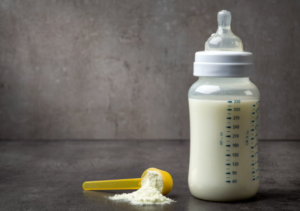
Even when solid foods are introduced, breast milk or formula milk continues to be the primary source of nutrition for the baby, particularly up to 8 months.
-Breast milk or formula supplies the baby with necessary nutrients like calcium, iron, and fluids
-Weaning does not imply the end of milk – it is a gradual process
-Solids are only complementary during the initial few months
-It is extremely important to continue milk feed with solids.
Hydration and why it is important
While the baby begins to take solids, hydration also becomes equally essential.
-Apart from breast milk and formula, you may begin to provide a small amount of water (after 6 months)
-Water aids baby’s digestion and avoids constipation
-Not excess water, just a small amount 2-3 times a day is okay to start with
Best first foods for easy digestion
When the baby is 6 months old, his digestive system begins to digest solid foods gradually. During this period, foods should be introduced that are soft, simple, and easily digestible.
-Mashed banana – soft with natural sweetness
-Steamed and mashed carrots or pumpkin – light and gut-friendly
-Rice water or moong dal ka paani – liquid consistency is ideal for baby
-Semolina kheer without sugar – soft and filling choice
Avoiding allergenic or hard-to-digest foods
 During the initial stage of weaning, some foods need to be avoided that are likely to be allergenic or hard to digest for the baby.
-Foods such as cow’s milk, honey, nuts, and egg whites should be avoided at first
-Do not serve fried or spicy foods at all
-High-fiber foods such as raw vegetables or whole grains may be hard to digest
-One new food at a time, so that allergy or intolerance can be monitored.
Role of breast milk or formula during weaning
Even when solid foods are introduced, breast milk or formula milk continues to be the primary source of nutrition for the baby, particularly up to 8 months.
-Breast milk or formula supplies the baby with necessary nutrients like calcium, iron, and fluids
-Weaning does not imply the end of milk – it is a gradual process
-Solids are only complementary during the initial few months
-It is extremely important to continue milk feed with solids.
Hydration and why it is important
While the baby begins to take solids, hydration also becomes equally essential.
-Apart from breast milk and formula, you may begin to provide a small amount of water (after 6 months)
-Water aids baby’s digestion and avoids constipation
-Not excess water, just a small amount 2-3 times a day is okay to start with
Tips to Soothe a Baby’s Tummy Naturally
1. Techniques of baby massage for relieving gas
Gas is very uncomfortable in the baby, particularly between 2-8 months when their digestive system is not yet mature. Massage not only gives relief but also calms down the baby.
How to perform the massage?
-Give the baby a flat surface to lie on and apply light oil (such as coconut or mustard oil).
-Massage baby’s tummy in a circle in a clockwise direction gently.
-The “I Love U” massage method is also popular – in this, you massage the left side of a baby by forming an “I”, then “L”, and ending in a “U”.
-Lightly cycling legs also assist gas release.
-Massage should preferably be done 30-45 minutes post-feed when the tummy has partially settled.
2. Right posture of feeding and burping
If the baby is positioned in the improper position while being fed, then too much air is taken in which can give gas and will cause discomfort.
What is the proper posture?
-While breastfeeding, keep the head a little above and his body touching your body.
-While bottle feeding, hold the bottle in a manner that the nipple is full of milk so that air does not go in.
How to burp?

-After or during feeding, place the baby on your shoulders and rub or pat his back gently.
-You can also keep the babysitting, with your hand supporting his chin.
-Once after each 60-90 ml of milk, burping should be done.
-Burping removes gas and the baby can sleep soundly.
3. Tummy time and its digestive benefits
Tummy time is not only beneficial for motor skills but also for digestion. When the baby lies on his tummy, there is a gentle pressure on his intestines which aids in digestion.
How and when to do tummy time?
-Begin with 3-5 minutes a day and increase the time gradually.
-Don’t do tummy time right after feeding, but wait for 30 minutes.
-Put the baby down on a soft mat or bed and have yourself or a colorful toy in front of him.
-This also helps in passing gas and also lifts the mood of the baby.
4. Probiotics for infants – are they safe?
Probiotics are good bacteria that promote gut health. If 2-8-month-old babies experience frequent digestion problems (such as gas, colic, or constipation), probiotics can be considered after talking to a doctor.
Are they safe?
-Probiotics are usually safe, particularly if they are specifically designed for babies.
-Always consult with a pediatrician since every baby’s immune system is unique.
-Breastfed infants are automatically provided with some probiotics, yet supplements can be used in the event of serious problem
Conclusion:
Understanding your baby’s digestive system at 2-8 months is key to ensuring a smooth and healthy developmental journey. From recognizing milestones to spotting red flags early on, every little piece of knowledge helps you make informed choices. Keep observing, stay patient, and trust your instincts—and when in doubt, reach out to your pediatrician.
Want more parenting tips and baby-care breakdowns? Stay tuned for our upcoming guides!