Can Early Intervention Really Change My Child’s Future? A Parent’s Complete Guide
Can early intervention really make a difference in my child’s future? Discover the impact of early therapy, speech therapy, and developmental programs on your child’s education, behaviour, and life.
“The early years decide the direction of the future.”
According to studies, 90% of brain development happens before the age of 5. Think about it: a strong or weak foundation in life, all because of the early years! Are you one of the many parents who have ever thought to themselves, “Can early intervention really make a difference in my child’s life?” You’re not alone in the dilemma of whether to wait and see if the child will catch up or to seek early intervention.
Will the child catch up on their own? Will it be better to seek early intervention?
The truth is, early intervention is not about labelling a child; it’s about unleashing their true potential. The brain is in a state of flexibility and in fast-learning mode, and early intervention can make a real difference in a child’s life in the long run. In the next section, we will discuss more about early intervention, its necessity, and its impact on a child’s life.
What Is Early Intervention and How Does It Work?
Early intervention simply refers to the early detection of developmental delays and learning problems in children and providing them with timely support. This method of intervention relies on the principle that the earlier a problem is recognised and acted upon, the better the outcome. Early intervention is not about labelling children; rather, it is about strengthening children and supporting them in their weaknesses. This teamwork involves the child, teachers, and parents.
Definition of Early Intervention in Child Development
Early intervention refers to a supportive system for child development, particularly for children with speech, learning, behavioural, and motor skill delays. The main aim of early intervention is to enable children to reach developmental milestones. This support system for child development is tailored, meaning it is tailored to meet the specific needs of the child.
Age Range (Focus: Birth to 8 Years)
Early intervention mainly targets children between birth and 8 years of age, as this period represents the fastest rate of brain development. The first five years of a child’s life are very critical in the development of communication, social, and emotional skills. Therefore, if problems are recognised and assistance is sought during this period, a child can prevent learning problems in the future. Thus, early intervention in preschool and early primary school years is very crucial.
Types of Services: Speech Therapy, Occupational Therapy, Behavioural Therapy
Early intervention may comprise various types of therapy depending on the specific needs of the child. Speech therapy caters to children with communication problems. Occupational therapy helps children improve their fine motor and handwriting skills. Behavioural therapy helps children with attention problems and those who have difficulty interacting with other children. The main aim of each therapy is to enable children to become independent and confident.
Individualised Education Programs (IEPs) and Early Support Plans
IEP stands for Individualised Education Program. It is a special education program designed for school-going children. It is a plan where the specific goals and accommodations required by the child are clearly stated. An early support plan is also possible at the preschool level. At this stage, the child’s progress is closely monitored by the teacher and the therapist.
Brain Plasticity and Why Early Years Matter Most
Brain plasticity is the brain’s ability to change and learn new things. The brain is more plastic in the early stages of a child’s development. At this stage, the brain is capable of learning new things. If the brain is given the appropriate stimulation at the early stages, the brain connections will be strengthened.
How Early Stimulation Strengthens the Neural Pathways in the Brain
When a child engages in repetitive activities such as talking, writing, or even social interactions, neural pathways in the brain become strengthened. Activities such as reading to children, talking to them, playing with them, and interactive learning stimulate the neural pathways in the brain. When therapy is consistent and reinforced at home, these neural pathways become strengthened, leading to better learning processes, emotional control, and socialisation.
Signs Your Child May Need Early Intervention
All children develop at different rates; however, some delays need not be ignored. It is therefore important to be aware of the signs, which will help the child get the support they need early on. The following are some signs that may warrant a child getting early intervention.
Speech and Language Delays
If your child is not using the right words at the right age or is having difficulties putting together a sentence, this is a sure sign that the child is not developing well. For example, a child is supposed to be able to form simple sentences by the age of 2-3 years. However, if the child is only using one-word answers or is not talking at all, then the child is not developing properly.
Another sure sign is if the child is not able to understand certain words, such as “bring the ball” or “come here.” It is worth noting that language delay is not only the inability to speak; the child may also not be able to understand.
If the child is not able to express him/herself, the child may get frustrated and therefore develop behavioural problems.
Limited Eye Contact or Social Interaction Difficulties
Eye contact is a vital aspect of socialisation. When a child does not respond to calls, makes no eye contact, and shows no signs of wanting to interact with people, this can be a cause for concern.
Some children may not want to play with others, opting to spend most of the time alone. Shyness can be common, but one needs to observe whether the child continues to display such behaviour.
When a child has problems with facial expressions and identifying how people are feeling, early intervention can be useful. These can be corrected through socialisation.
Delayed Motor Skills (Walking, Fine Motor Coordination)
Motor skills can be divided into two types: gross motor skills, such as walking, running, and jumping, and fine motor skills, such as holding a pencil and pressing buttons. If a child walks later than the expected age and has problems with balancing, he/she can be having a problem with gross motor skills.
Fine motor delays can also be seen in children who have problems with holding crayons, stacking blocks, and picking up small objects. This may also delay school readiness.
If the child faces problems in coordinating his/her body movements, occupational therapy and physical therapy may help.
Difficulty in Following Instructions
Parents should observe whether their child faces problems in following simple instructions. For example, if you ask your child to “put on your shoes and get your bag,” and your child seems to get confused and ignore your instruction, this may indicate a hearing and processing problem.
This may also indicate an attention problem if the child seems distracted easily. In a school environment, children with this condition may find it difficult to follow teachers’ instructions.
Support for children with this condition may provide step-by-step guidance and learning techniques to improve their understanding.
Behavioural Challenges or Issues of Emotional Regulation
Every child experiences a tantrum or two, but if they are extreme, too frequent, or unusual for the child’s age, then a deeper assessment is called for. Emotional regulation is the ability to understand and regulate one’s emotions.
If a child responds to small issues in an extreme way, is aggressive, or cannot regulate their frustration, then this is a red flag.
Behavioural therapy and parent guidance are effective in providing children with skills to help them with their emotional and social development.
Can Early Intervention Really Change My Child’s Future? (The Science Behind It)
When we talk about early intervention, we’re not simply talking about assisting children. Rather, we’re referring to a science that takes advantage of the “golden years” of a child’s development. But how do we know that this really works? Let’s look at the science behind it.
Brain Development and Neuroplasticity
The human brain grows fastest during the early years of a child’s life. This is also the time when the human brain is most malleable or “plastic,” a phenomenon known as neuroplasticity. This simply means that the human brain can build stronger connections based on new learning and experiences.
When we intervene early in a child’s life, we’re essentially building the child’s brain in the “right” direction if there is a delay in speech, motor skills, or behaviour.
Simply put, the sooner the support is received, the sooner the brain adapts and learns to develop skills.
Research Showing Improved Academic Outcomes
Research has proven that kids who receive support at an early age tend to have better school readiness. This is because their concentration levels, listening skills, and class participation are greatly improved.
Early support helps kids build basic skills such as communication skills, problem-solving skills, and memory skills. This is the foundation of their success in school.
Long-term research has proven that kids who received support at an early age tend to have higher graduation rates and fewer chances of requiring extra school support.
Reduction in Long-Term Behavioural Problems
When kids’ behavioural problems are not addressed at an early age, they tend to become worse over time. Early support helps kids learn self-control.
Kids learn to understand and express their feelings through therapy. This has the effect of reducing aggression and frustration.
Research has proven that early support for behavioural problems has the effect of reducing anxiety and conduct disorders in teens.
Better Communication and Social Skills
This aspect of communication will surely improve friendships and bonding. This aspect of communication can improve speech clarity and sentence construction.
Training in social skills helps children improve their basic interaction skills, for example, eye contact, taking turns, and sharing. This helps improve relationships.
Confidence in communication reduces the chances of the child being rejected by their friends. This increases their confidence in social situations.
Increased Independence and Self-Confidence
This is one of the main benefits of early intervention. The child gradually starts to become independent. This helps improve daily routine and decision-making skills.
When the child starts to accomplish small milestones independently, this increases their self-confidence. This is because they feel they can accomplish anything.
This increases the child’s independence in adulthood. The child is ready to face the challenges of adulthood.
Long-Term Benefits of Early Intervention
Early intervention is not just about short-term benefits but about the long-term benefits that a child can enjoy in their life. The long-term benefits of early intervention have been explained in the following points.
Improvement in School Readiness
Early intervention helps children prepare themselves for school, both mentally and emotionally. When children face problems in speech, motor skills, or behavioural issues, early intervention helps them overcome these problems, making them comfortable in the school environment.
This helps children improve their attention span, making it easier to follow what their teachers tell them to do in class. It also helps children improve their basic learning skills, making it easier to read and communicate with each other. As a result, children do not find it difficult to attend school but do so with confidence.
Higher Graduation Rates
Research indicates that children who receive early developmental support have a reduced dropout risk. Early intervention helps children improve their basic knowledge, which helps them in their higher classes.
When children understand the basic concepts, it becomes easier to understand other concepts in higher classes, helping them complete their graduation naturally.
Stronger Emotional Resilience
Emotional resilience refers to the capacity to deal with situations. This helps children understand and control their emotional states.
When children are exposed to coping mechanisms, self-regulation, and problem-solving techniques at an early age, they become less susceptible to breakdowns in situations of failure and rejection. This helps them become confident and cope better with stressful situations in the future.
Better Peer Relationships
Development of social skills in children is an essential aspect of early intervention. This helps children have better relationships with their peers.
This helps prevent confusion and enhances friendships. In the long run, this helps children have better mental well-being and confidence.
Early Intervention for Specific Conditions
Every child is unique, and all difficulties develop uniquely. The goal of early intervention is to identify the unique difficulties of a child and offer support accordingly. As support is offered at a young age, progress is quicker and more sustainable.
Autism Spectrum Disorder
Children suffering from autism spectrum disorders often face difficulties in social interactions, communication, and behavioural patterns. In this regard, early intervention is of vital importance. Speech therapy, behavioural therapy, and social skills training are effective in this context. Such training helps children to develop eye contact, understand emotions, and develop social interactions.
The earlier such training is introduced, the quicker the development of new connections in the brain. This helps to overcome repetitive behaviours and develop communication skills, making a child more independent and school-ready.
ADHD and Attention Difficulties
Children with ADHD find it difficult to focus their attention, follow directions, and control their impulsiveness. Interventions can help children develop self-regulation techniques.
If parents and teachers adhere to a routine, a child’s attention level will increase over time. Interventions such as positive reinforcement and setting goals for the child can greatly help them in their studies in the future. This will also boost their confidence.
Speech and Language Disorders
If a child talks slowly or finds it difficult to communicate, early speech therapy is highly recommended. The speech therapist will focus on improving the child’s vocabulary, sentence formation, and pronunciation.
Early intervention helps the child overcome frustrations as they try to communicate better. This will help them bond socially, which will greatly help them in their studies in the future.
Developmental Delays
When a child is said to have a developmental delay, it means that the child is not meeting the milestones expected of a child of that particular age. For example, a child is expected to walk, talk, and use problem-solving skills. In this case, the child is given special training to focus on the child’s motor skills, cognitive skills, and daily living skills. This helps a child to gradually become closer to their peers, thus avoiding future dependency.
Learning Disabilities
Learning disability is a condition that occurs when a child is unable to read, write, or use numbers. This condition occurs in dyslexia and dyscalculia. This condition can be addressed through special training that helps a child become better. This training helps a child to become better and not feel like a slow learner. This helps a child to become better and focus more on their strengths.
Common Myths About Early Intervention
Many parents fear the mere thought of early intervention. The fear is often because of society, parents, and their own misconceptions about early intervention. Let’s discuss the common myths associated with early intervention.
“My child will grow out of it.”
This is the most common myth that parents believe about their children. Some developmental delays in children may indeed improve over time, but that is true in a few cases, not all. Therefore, it is always better to consider early intervention to make the situation better, rather than creating more tension.
“Therapy means something is seriously wrong with my child.”
Many parents believe that therapy is required only if something is seriously wrong with their child. The truth is, therapy is a support tool, not a tool to punish children. Just as a child needs a tutor to improve in a particular subject, therapy is a tool to help children grow better, and it does not mean that something is seriously wrong with the child.
“It’s too early to diagnose.”
Some people claim that it is too early to diagnose a child. But experts know that the mind is very flexible during the early stages. If the signs are obvious during the early stages, it is advantageous to have the child diagnosed. The reason for diagnosing a child is not to label him/her but to establish a proper support plan to enhance the child’s development.
“Seeking help will label my child.”
Some parents claim that seeking help for their child will lead to labelling by society and school. This was true in the past, but today awareness has been achieved. Seeking help is a sign of responsible parenting.
How Parents Can Support Early Development at Home
Early development and learning do not only take place in therapy centres and schools. In fact, the home environment is the most influential in this case. Parents can support their children’s early development and learning in the following ways:
Creating Structured Routines
Children always feel comfortable in situations where there is a routine. For example, if a child always knows what to expect after waking up in the morning and what his/her routine is before going to bed, his/her anxiety levels will always be reduced. This helps in creating discipline in children and helps in the development of the brain. Mealtimes, study times, and playtimes help in the emotional development of children and eventually minimise behavioural problems in kids.
Reading Daily to Boost Language Development
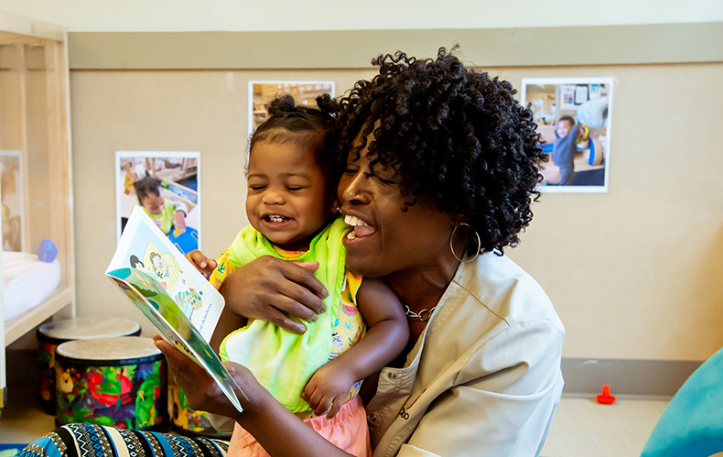
Parents can do a lot for their children by spending just a small amount of time each day reading to them. For instance, if a parent reads a story to his/her child, the child will have the opportunity to learn new words and expressions. This helps in the development of his/her imagination.
Encouragement of Play-Based Learning
Play is not merely a way to pass the time. Play is actually a learning experience. For example, when children play with building blocks, pretend, and puzzles, they are actually learning problem-solving skills and becoming creative. Play-based learning is a natural and stress-free way of learning, which is effective and does not put children under any kind of pressure.
Regulation of Excessive Use of Screens
Excessive use of screens can affect a child’s attention span and interaction skills. Excessive use of mobile phones and watching television actually hampers real-life communication skills. Limited screen use can actually reduce overstimulation of a child’s brain and encourage them to participate in more physical activities and communication. Parents creating screen-free family time actually helps to bond and develop a child’s emotional stability.
Practice of Positive Reinforcement
Positive reinforcement is appreciating good behaviour. For example, if a parent says to a child, “I love that you shared your toys,” this makes a child feel good about themselves. Positive reinforcement helps a child feel secure and makes them repeat the same good behaviour. This gradually builds a child’s confidence and emotional stability.
Conclusion
So, can early intervention really change your child’s future?
Yes – and often in ways that are life-changing.
The early years are a window of opportunity. It’s a time when the brain is developing fast, and the right support at the right time can make a big difference for communication, emotional, academic, and independent outcomes for the future. Early intervention isn’t about ‘fixing’ a child – it’s about building a strong base for them.
If you spot signs of delay, don’t wait for the problem to ‘sort itself out.’ Seek advice, ask questions, and take action.
Because the early steps you take can have a massive impact later.