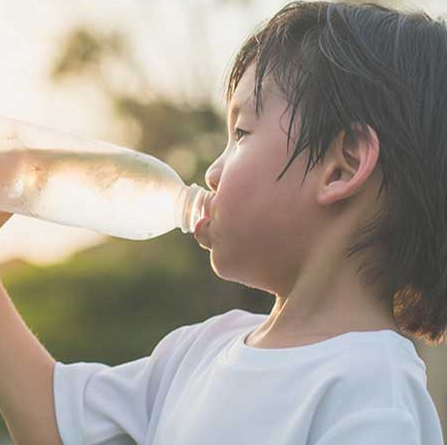
How to Keep Kids Safe from Heat Strokes Practical Tips
How can you protect your children from heat stroke problems in the summer season? Know easy and practical tips – dehydration, sun protection, and summer routine all in one place!
“Every 10 minutes a child is taken to the hospital for heat-related illness.” Just thinking about it makes one feel scared, isn’t it?
Children get very excited in the summer season and they feel like playing outside on the ground and eating mangoes and enjoying their whole time but this fun can sometimes turn into a problem or even danger for children if we do not take care of their safety. Heat stroke is one such condition that can be very serious for children, but the good news is that it is completely preventable!
In this blog, we will talk to you about how you can keep your children safe and tell you about some simple and parent-friendly solutions. You will get a full guide by which you can take care of your children’s safety – from warning signs to prevention, from summer routine to emergency care. So let’s make this summer safe and cool… with your little ones!
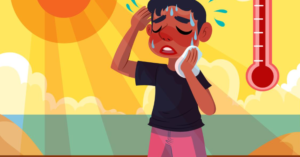
What Is Heat Stroke and Why Are Kids More Vulnerable?
Heat stroke is a very serious medical condition in which our body temperature rises too much and this is not good for our body — usually above 104°F (40°C). This does not happen to us unless we fail to cool down after our body gets heated. Heat stroke can be life-threatening if not treated immediately.
-Confusion between heat exhaustion and heat stroke is common, but both are different conditions.
-In heat exhaustion, the child feels tired, there is excessive sweating, and the body remains cold.
-In heat stroke sweating stops, body temperature becomes dangerously high and the child can become unconscious or confused.
Why are children more vulnerable to heat stroke?
The system of body temperature regulation is not fully developed in children which is very less effective in cooling down their body temperature as compared to adults. Their body absorbs heat quickly and cannot release it efficiently.
More outdoor play and physical activity – During summer vacation or school time children spend more time in outdoor games. Direct sunlight and physical exertion further increase the body temperature.
Not being mindful of hydration – Kids feel less thirsty and do not drink water at the right time. Dehydration causes their body to heat up even quicker.
Skin surface area is greater – Kids have a greater skin surface area-to-body ratio, which causes their bodies to absorb more heat.
Some popular myths regarding heat stroke that parents need to know:
Myth 1: Only direct sunlight leads to heat stroke
Reality: Even if the child is in an enclosed car or poorly ventilated room, he can still suffer from heat stroke—even without sunlight.
Myth 2: Sunscreen for children is enough
Reality: Sunscreen shields only against UV rays, not against overheating. Children need light clothing, water, and a cool environment as well.
Myth 3: If the child sweats, he is safe
Reality: When heat stroke begins, the body ceases to sweat. Abrupt dryness following profuse sweating may be a warning sign.
Warning Signs of Heat Stroke in Children
Children should be looked after very well during the summer season. Heat stroke is a dangerous situation that can be caused by staying in excess heat. By knowing its early and extreme signs, you can assist instantly.
Early Symptoms (Initial Symptoms):
Flushed Skin (Red Skin): If the skin of your child suddenly becomes red, then this can be the initial sign of heat stroke.
Dizziness (Dizziness): If the child complains of dizziness or feeling unsteady, then it should not be neglected.
Excessive Sweating (Too much sweating): While sweating is common during summer, if the child is sweating excessively then it can be a warning sign.
Severe Signs (Serious Symptoms):
If heat stroke rises then the following serious symptoms can be observed:
Confusion (Bhram): If the child does not know where he is or what he is doing, then it is extremely serious.
High Body Temperature (Tez Fever): If the child’s temperature rises too high (usually 103°F or above) then the child must be taken to a doctor at once.
Fainting (fainting): If the child faints suddenly, it is a medical emergency.
If you notice these severe symptoms in your child, don’t be afraid at all:
-Confusion (Bhram)
-High body temperature (Tez Fever)
-Fainting (fainting)
-If the child is experiencing initial symptoms, it is still advisable to consult a doctor, especially -if the symptoms are not reducing or worsening.
Top Preventive Measures to Keep Kids Safe from Heat Strokes
It is our responsibility as parents to protect their children in the summer season. If we have a little planning and awareness, we can save our children from serious problems like heat. Here we will tell you some effective preventive measures that you can follow to keep your children safe:
1. Dress your children in light and breathable clothes
You can use cotton or linen breathable fabric for your children in the summer season, which will reduce the heat and you can also use light-colored clothes that reflect the heat and Use less dark clothes as they absorb heat. Synthetic fabrics should be avoided as they do not absorb sweat and create discomfort.
2. Pay attention to hydration – How much water do children need?
The body temperature of children increases very quickly, so it is very important to give them water frequently. You should give water to children every 30 to 35 minutes even if they do not feel thirsty. And if children are busy playing outdoor games, then pay more attention to whether they are hydrated or not. Fresh juices, coconut water, and homemade lemon water are also good options, but sugary drinks and sodas should be avoided.
3. Limit outdoor play during peak summertime
The heat is most intense between 11 AM and 4 PM, so avoid sending children outside during this time. Try to keep them indoors. If outdoor play is necessary, let them play in the morning. While playing in the garden or park, their head should be covered (with a hat or cap), and small breaks should be taken in a cool zone.

4. Sunscreen vs Sun Protection Clothing – Which is better?
For young children, sun protection clothing like UV-protected full-sleeved tops, wide-brimmed hats, and sunglasses are safer. If sunscreen has to be used, use dermatologist-approved, baby-safe SPF 30 or more. Sunscreen needs to be applied 20-30 minutes before venturing outside and needs to be reapplied every 2-3 hours.
5. Special tips for school-going children
For kids attending school, a few additional measures can be taken to keep them away from the heat during outdoor activities and lunch breaks:
Insert cooling food items in their tiffin like watermelon, curd, and cucumber.
-Insert cold (but not freezing) water in the drinking bottle
-Ask the school authorities to allow children to play under shade
-Insert an additional napkin or towel so that they can wipe their face
-If the uniform is dark-colored, it is helpful to wear a cotton undershirt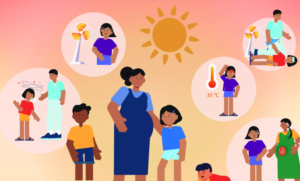
Heat-Safe Summer Activities for Kids: How to keep kids occupied and cool during summer
Summer has set in, and one can only imagine the Delhi heat! It is not easy to keep children confined within the house, but going out to play in the scorching sun is not safe either. Let us then look at some heat-safe activities that will engage your children and also safeguard them from the heat.
Indoor Games That Keep You Active:
If it’s extremely hot outdoors, you can enjoy it indoors as well. Some indoor games engage children:
-Hide-and-seek (Hhupa-chhupi): Another age-old favorite!
-Tag (Pakdam Pakdai): This needs a little space but is a great exercise to release the energy.
-Obstacle course: Create an obstacle course indoors at home by placing pillows, blankets, and chairs.
-Hopping along: Play music and have the children dance. This is exercise and play at the same time.
-Indoor bowling: Create a bowling alley using plastic bottles and a softball.
-Board games and puzzles: These keep your mind working and banish boredom too.
-Water-Based Activities: Pools, Splash Pads, and Safety Tips

Water-Based Activities: Pools, Splash Pads, Aur Safety Tips:
Water play is a lot of fun during summer. Where possible, pools or splash pads are wonderful. But safety must be taken very seriously:
Supervision: Never leave kids alone near water. Always have an adult with them.
Sunscreen: Sunscreen should be applied even when in water.
Hydration (drinking water): Keep forcing kids to drink water when playing.
Shallow end: Young children must stay in the shallow end at all times.
Splash pad safety: Splash pads are slippery as well, so take care.
Sneaky Strategies to Keep Home Time Cool (DIY Cool Zones, Summer Crafts):
Interesting and engaging things can still be done while being at home:
DIY Cool Zones
-Fort construction: Construct a nice fort using bed sheets, pillows, and chairs. You may declare this to be your “cool zone“.
-Reading nook: Create a cozy corner in which children may read books.
-Indoor picnic: Have a blanket spread inside the living room and have an indoor picnic.
Summer Crafts:
-Paper fans: Creating fans with colored paper is a useful as well as amusing activity.
-Ice painting: Put food coloring in ice cubes and paint on big pieces of paper. This is so cool and creative.
-Salt dough ornaments: Create summer shapes from salt dough and paint them.
-Bead crafts: Creating a bracelet or a necklace can also be fun for kids.
-Nature collages: If you ever venture outdoors, you can pick leaves and flowers and create a collage out of them.
First Aid for Heat Stroke: Each parent should be aware of this
If the child has symptoms of heat stroke on summer days, it is crucial that immediate action be taken. Fearfulness can compromise their health. Here we are going
to learn what parents should do if the child has symptoms of heat stroke, what should be at home, and when should one seek emergency services.
What to do right away if a child is exhibiting symptoms of heat stroke
– Take the child to a cool location – Keep him in an AC room or shaded area away from sunlight.
-Try to get him to drink cold water – If the child is alert, administer cool (but not ice cold) water or ORS in small amounts.
-Clothing should be light and loose cotton – remove most of the clothing, and get rid of tight clothing, so that the body heat can be dissipated.
-Wet the child’s hands, feet, and neck with a damp cloth – attempt to lower his body temperature by using a cool damp cloth or sponge.
-Turn on a fan or generate a source of air – so that the cooling method is rapid.
Home Remedies vs Emergency Assistance – When do you call the doctor?
When will home assistance work:
-If the child is only slightly dizzy or tired
-His body temperature is 100–101°F
-He is taking small sips of water and is being responsive
When do you need to get a doctor or emergency assistance immediately:
-When the child becomes unconscious or seems very confused
-His body temperature is 103°F or higher
-He is vomiting or can’t talk clearly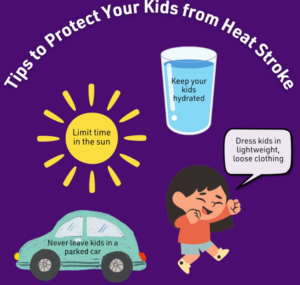
-His skin is completely red, dry, or hot without sweating
-The child refuses to drink water or is not drinking anything
Heat Emergency What should be in the kit?
Parents should keep a basic heat emergency kit ready during the summer season. Make sure to include these items in it:
-ORS sachets (for rehydration)
-Cold water or electrolyte drinks
-Wet wipes or sponge cloth
-Thermometer (for checking body temperature)
-Small cotton bedsheet or light towel (for cool compress)
-Small battery-powered fan (helpful if the light fails)
-Ice pack or cold gel pack (but do not place directly on the skin)
-List of emergency contact numbers (pediatrician, hospital, ambulance)
Conclusion: Stay Cool, Stay Safe
Heat strokes are scary—but preventable. With a mix of awareness, preparedness, and small daily habits, you can protect your little one from summer’s harshest health threat. Keep this guide handy, stay alert during the hotter months, and let your kids enjoy the sunshine—safely. Share this post with fellow parents because when it comes to heat safety, the more informed we are, the safer our children stay.
It was really great to read all this