
Importance of IEP for Special Needs: A Guide for Parents and Educators
Discover the significance of an Individualized Education Program (IEP) for children with special needs. Learn how IEPs foster educational achievement, customized learning, and legal protections for children with disabilities.
Every child is entitled to a quality education, but children with special needs require additional supports. This is where an Individualized Education Program (IEP) becomes especially important.
An IEP is a legally binding commitment to make certain that children with disabilities are provided with the special instruction and support they need to be successful academically and socially.
In this blog article we will discuss why IEPs can be so important, the benefits they provide, and how parents and educators can collaborate to create a plan.
What is an Individualized Education Program (IEP)?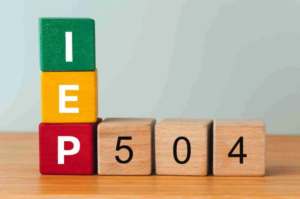
All children have different ways of learning according to their own perspective, but children with special needs require special support. Due to this, individualised education plan was made. It is a legal binding in which all people are involved like special educator, teachers, parents and in it, children’s learning goals accommodation is defined so that all the needs of a child are fulfilled.
In this, it is a team effort in which the child gets help in achieving his goal with the support of many people like teachers, special educators, parents, therapist and school representative prepare a personalised learning plan which is not only related to academics but is also for improving social and behavioural skills.
The Legal Framework Behind IEP (IDEA Act)
The concept of IEP comes from IDEA (Individuals with Disabilities Education Act). This is a U.S. federal law that protects the educational rights of students with disabilities.
Some key points of IDEA:
– Free and Appropriate Public Education (FAPE) – Every child should get free and suitable education that is tailored according to his o
r her needs.
– Least Restrictive Environment (LRE) – Children with special needs should get maximum regular classroom experience, as long as it serves their best interest.
– Parental Rights & Involvement – Parents have full right to attend IEP meetings, give their suggestions and review the implementation of IEP.
– Evaluation & Review – An IEP is created after a child has been properly assessed, and it is reviewed annually to make necessary improvements.
If a child has academic challenges due to a learning disability, ADHD, autism, speech delay, or another special need, an IEP helps make the learning process easier and more effective.

The Importance of an IEP for Special Needs Children
Each child learns differently and requires something different, but special needs children require special assistance to realize their potential. An Individualized Education Program (IEP) is a customized learning plan that guarantees a child’s academic and personal development. Let us know why an IEP is necessary and how it can make a difference in the life of a special needs child.
- Customized Learning Plan
Each child is an individual learner, and the largest advantage of an IEP is that it has a child-tailored learning plan.
– Strategies for education are formulated with consideration for the strengths and weaknesses of the child.
– There is usage of specialized instruction methods and resources to assist a child’s most effective learning style.
– This guarantees that the child is able to learn at his or her pace without any undue stress.
- Academic Support
For students with special needs, regular classroom education may be difficult, hence IEP offers additional support to them.
– Trained teachers and special educators provide them with proper guidance.
– Altered curriculum and additional learning material are utilized so that the child can grasp it easily.
– Accommodations such as extra time for tests, easier assignments, and individual sessions are offered.

- Skill Development
The IEP is not centered around academics but also gives special importance to the child’s all-around development.
-Social skills are developed so that the child becomes easily interactive.
– Speech therapy as well as special exercises are delivered in order to enhance communication.
-Behavioral support is offered so that the child will be able to control himself/herself as well as understand emotions.
- Legal Protections
The IEP is a legally binding document that guarantees that a child receives his or her education rights.
– According to IDEA (Individuals with Disabilities Education Act), a child has the right to free and appropriate education.
– If the school is not adhering to the IEP, parents can proceed to take legal action.
– This ensures that all children receive equal learning opportunities.
- Parental Involvement
Parents’ role is quite significant in the IEP process since they are included in decision-making.
– Parents can participate in IEP meetings and express their concerns.
– They receive information about their child’s progress so that they can offer required support.
– There is constant communication with teachers and specialists so that the development of the child takes place smoothly.

Key Elements of a Successful IEP
An Individualized Education Program (IEP) is effective only when it has a proper structure and well-defined aspects. It guarantees that special needs children receive appropriate support and direction so that they can reach their full potential. Let us learn the key elements of IEP in detail:
- Present Levels of Performance (PLOP) – Evaluation of what the child is presently able to do.
PLOP is a beginning point that informs where the child is at academically, socially and behaviorally.
– Strengths and Weaknesses: This assessment informs in which areas the child is doing well and in which areas he is having difficulty.
– Teacher and Parent Observations: The classroom behavior of the child, learning style, and special challenges are incorporated.
– Test Results & Assessments: The child’s past performance, test scores, and special education assessment are examined.
Example: If a child is reading difficult, the PLOP will state that he or she cannot identify sight words or has weak comprehension.
- Specific Measurable Goals – Short-Term & Long-Term Educational Goals
The IEP must contain well-defined learning objectives that are measurable, achievable, and time-bound.
– Short-Term Goals: What will a child accomplish in the next 3-6 months?
– Long-Term Goals: Yearly goals that support the child’s overall growth.
-SMART Goals Approach: (Specific, Measurable, Achievable, Relevant, Time-bound).
– Illustration: For example, if a child suffers from writing, a short-term goal may be – “The child will acquire the ability to write 5-6 correct sentences in 3 months.”
- Special Education Services – Required Support & Therapies
IEP specifies the type of additional support or therapy the child must receive.
-Speech Therapy: If the child is unable to speak, there will be assistance from a speech therapist.
-Occupational Therapy (OT): For enhancing fine motor skills, handwriting or daily activities.
-Behavioral Therapy: Self-regulation and behavior modification sessions for children with ADHD or autism.
-Example: A child who has a speech delay will be included in his IEP that he will receive 2 sessions of speech therapy per week.
- Accommodations & Modifications – Adjustments to Make Learning Easier
The IEP has accommodations and modifications so that the child is able to perform best as per his individual learning style.
-Accommodations: There is no alteration in the learning process, but help is provided.

Additional time for assignments & tests.
Visual aids or audio assistance.
Quiet classroom or special seating.
-Modifications: Alterations are made in the curriculum to match the level of the child.
Simplified worksheets and assignments.
Alternative learning methods (videos, hands-on activities).
- Progress Monitoring – Following the child’s progress
The IEP document is not static; it is reviewed and revised on a regular basis to ensure that the child is making satisfactory progress.
-Quarterly Progress Reports: Teachers and parents are given an update every 3-6 months.
-Frequent IEP Meetings: Every year, there is a review when goals are evaluated.
-Adjustments if Necessary: In case the needs of the child change, new supports or goals are inserted into the IEP.
How to Create and Implement an Effective IEP
Creating an individualised education plan and successfully implementing it in a child’s education is a step by step process in which the active involvement of parents, teachers and special educators is a very important part. This ensures that children get the best education possible.
Let’s understand each step:
Step 1: Requesting an Evaluation – Beginning of the IEP Process
The first and most important step in creating an IEP is assessing the child’s educational needs.
Who can make the request?
-Parent
-Teachers
-Special educators
-Doctors (if there is a medical-based disability)
How to request?
A formal written request has to be written to the school that mentions the child’s learning difficulties and challenges.
The school conducts the evaluation through a team of experts who assess cognitive, behavioral, and academic skills.
Step 2: Meeting with the IEP Team – Who is Involved?
There is an IEP team meeting where all of them collectively determine which support system will be ideal for the child.

– Who is on the IEP Team?
Parents – The most vital stakeholders who know their child’s needs the best.
General Education Teacher – He/she informs how the child is doing in the regular classroom.
Special Education Teacher – He/she recommends which special teaching approaches should be implemented.
School Psychologist / Therapist – He examines the cognitive and emotional requirements of the child.
IEP structure is determined in the meeting, whereby the strengths, weaknesses and educational objectives of the child are delinea
Step 3: Writing the IEP – Developing Realistic & Attainable Goals
So once the evaluation is complete and the IEP team is ready, then the IEP is written. It is a formal document that serves as a map for the education of the child.
What are the contents of the IEP?
– The current performance level of the child (Present Level of Performance – PLOP)
– Short-term & long-term goals which must be measurable
– Special education instruction (speech therapy, occupational therapy, behavior therapy, etc.)
– Accommodations and modifications that will facilitate learning for the child
– Progress assessment plan that will monitor if the child is progressing
The IEP is customized based on the specific strengths and difficulties of the child.
Step 4: Carrying out the Plan – Parent-Teacher Collaboration
It is the greatest challenge after the IEP to actually put it into practice in the daily routine.
Key points of implementation:
-Teachers are specially trained so that they can assist the child more effectively.
– There is constant communication between parents and school.
– Correct records of the progress of the child are maintained so that changes can be made in the IEP if needed.
Implementation of IEP will be effective only when parents, teachers and specialists act like a team.
Step 5: Reviewing & Revising the IEP – Annual evaluation is necessary
The IEP is not a fixed document but gets reviewed and updated annually to see if the child’s needs are being addressed.

Annual Review Process:
-An IEP meeting is conducted where the child’s progress is reported.
-If goals have been met, new goals are established.
-If the child requires more support, added services are provided.
– If none of the IEP is functioning, then modifications are made.
If parents believe that the IEP is not being executed appropriately, then they can request changes through their legal rights.
Common Challenges in IEP Implementation & How to Overcome Them
IEP is a very effective concept and is also strong but when it comes to following it, then there are many challenges in it. It is very important for both parents and teachers to understand that following IEP in the right way is very important for the development of the child’s academic, social and different abilities. There are some common problems and we discuss their solutions.
- Lack of Awareness: Educating Parents & Teachers About IEP Rights and Processes
Many teachers and parents do not get proper education about IEP, due to which there can be a big challenge in the development of the student, due to which teachers and parents are not able to properly utilize the potential of IEP. find
Solution:
-Workshops & Training: Schools should conduct regular IEP awareness sessions in which parents and teachers are explained their rights and responsibilities.
-Online Resources & Support Groups: Parents should use blogs, videos, and government websites to learn more about IEP and special education.
-Direct Communication: Schedule one-on-one meetings with the school’s special education department to clear up doubts.
- Insufficient Resources: How to Advocate for Better Support
Many times, schools lack special educators, speech therapists and occupational therapists which are very important for the implementation of IEP. Apart from this, teachers do not have supportive technology available all the time.
Solution:
– Request for Additional Services: Parents and teachers should make written requests to school authorities so that the child can get the necessary support.
– Seek External Support: If the school does not have resources, then take help from government schemes, NGOs or private therapists.
– Raise Awareness: Schools should advocate for proper funding and staffing, in which PTA meetings and talking to local education boards can be helpful.
Conclusion:
- An IEP is a powerful tool that ensures children with special needs receive the education and support they deserve.
- By working together, parents, educators, and specialists can create an effective IEP that empowers a child to reach their full potential.
- If your child or a student in your care qualifies for an IEP, take the necessary steps to advocate for their educational rights.