Top 10 Causes of Bad Parenting and How to Overcome Them
Learn the most common causes of poor parenting – including stress, emotional trauma, and ignorance – and learn how to enhance your parenting skills.
“Behind a good child, there is always a parent who believes in him from the beginning.”
But when this belief is concealed behind stress, frustration, or old problems, the magic of parenting starts to fade. In today’s fast-paced life, parenting is not easy-neither a manual, nor a fixed formula.
There are a lot of intricate reasons behind poor parenting emerging as emotional exhaustion, economic stress, addiction to technology, and personal traumas. In this article, we will explore the most prevalent and clandestine reasons that are stopping parents from becoming the best possible versions of themselves. Concurrently, we will offer practical solutions to make your parenting process robust and aware.
Let’s get real and honest about parenting blunders—and begin the journey to becoming more aware, connected, and compassionate parents!
What is Bad Parenting?
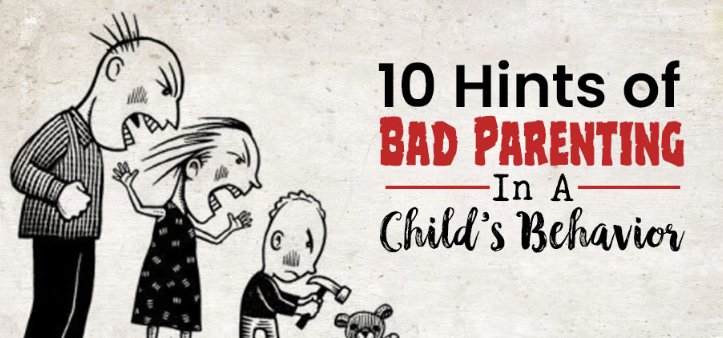
Parenting not only involves giving food, teaching, or bringing up a child, but also involving himself in taking care of his mental and emotional development. Whenever parents adopt such behaviors, mannerisms, or methods of parenting in their lives, which have bad effects on the child’s personality, it would be referred to as bad parenting.
Determining Bad Parenting from Psychological and Behavioral Benchmarks
Bad parenting, according to psychologists, is:
-Emotional unavailability: When the parent is unable to comprehend and respond to the emotional cues of the child.
-Inconsistent behavior: Nowhere is very strict, somewhere very relaxed – this is confusing for the child.
-Negative reinforcement: Just scolding, beating, or punishing, without any appreciation.
-No boundaries or structure: When a home has no clear rules, the child does not develop discipline.
Myths vs. Realities about Bad Parenting
-Myth 1: Every strict parent is a bad parent.
Reality: Discipline is required, but an abusive or cruel attitude towards parenting is unhealthy.
-Myth 2: If the parent is occupied, he is neglectful.
Reality: Being occupied is not a fault, but if there is no emotional connection, then issues are possible.
-Myth 3: Bad parenting exists only in illiterate people.
Reality: Irrespective of literacy, if there is no knowledge and emotional quotient, then errors can occur in parenting.
-Its effect on the child
Poor parenting directly impacts the emotional, mental, and social growth of the child:
-Emotional growth: The child becomes insecure, fearful, or develops low self-esteem.
-Mental well-being: Issues such as anxiety, depression, or behavioral problems can arise.
–Social growth: The children fail to bond with peers, do not trust others, or turn violent.
Bad parenting is not because the parent himself is a bad individual. At times it is a result of lack of awareness, stress, or unresolved child issues. But once we know what bad parenting is, then half the battle is won to improve it.
Common Signs of Bad Parenting
Bad parenting is not a flawless formula, but there are certain indications which suggest that things are going haywire somewhere or other. Such errors are, at times, done unknowingly, but these have a profound effect on the child’s growth. Let us know some signs that suggest poor parenting:
1. Emotional Unavailability and Neglect
In case the parents are not emotionally available, then the child starts feeling isolated.
-When the child wishes to communicate something, and the parent is busy or dismissive, it is emotional neglect.
-Only meeting the minimum needs of food, and clothing, and sending the child to school is not sufficient. Children also require emotional support.
–If the parent is continuously busy on the phone or immersed in his issues, the child feels neglected.
2. Harsh discipline or lack of discipline
A balance is necessary.
-Too much strict behavior—such as scolding, yelling, beating—frightens and makes children insecure.
-If discipline is too loose, the child is not aware of the limits, which can cause trouble in his behavior.
-It should be taught to the child, not punished.
3. Inconsistent Routines and Mixed Messages
Consistency is very significant in parenting.
–If you are doing something today and doing the opposite the next day—the child is confused.
– Mixed messages confuse the child so they do not know what is good and what is bad.
-In a way sometimes you provide a tooth for something, then the other time you say nothing regarding the same thing—double standards are produced.
4. Lack of Communication or Empathy
Communication with children and listening to their things is the foundation of parenting.
-If you dismiss their feelings or utter “Why do you think so much”, then you are shattering their trust.
-When a child cannot express himself or feels that nobody will hear, he becomes emotionally detached.
-Not only is communicating giving instructions, but it also encompasses hearing and comprehending.
5. Overprotectiveness or Micromanaging
Controlling children in every aspect is also a blunder.
-When you make their decisions all the time, do not leave them a chance to explore, then their confidence cannot grow.
-Overprotectiveness makes children dependent and they feel insecure even in small situations.
–Sometimes it is necessary to let them make mistakes – this is where their growth occurs.
Top 10 Root Causes of Poor Parenting – Actual Reasons Behind Poor Parenting
Parenting is a process that needs lots of patience, compassion, and emotional resilience. But when some issues face us, the quality of parenting is equally compromised. Let us identify those 10 major reasons that can divert any parent towards “poor parenting“.
1. Unresolved Childhood Trauma – Effect of childhood hurts on parenting
Often parents themselves have experienced childhood suffering and trauma – such as emotional neglect, abuse, or punitive discipline. When they don’t deal with their childhood issues, unconsciously they project their childhood issues onto their kids. That makes parenting poisonous.
2. Mental Health Issues – When the mind itself reaches out for help
Mental illness like depression, anxiety, bipolar disorder, or personality disorders renders parents emotionally unavailable. When the parent is not emotionally stable, he cannot meet the emotional needs of his child.
3. Substance Abuse – When drug addiction dominates life
Alcohol or drug addiction has a strongly negative impact on parenting. The focus of the parent is on the drug or alcohol and not on the child’s development. This results in neglect, abuse, and instability.
4. Parenting Knowledge Lack – Where there is a lack of guidance
Parenting is not an instinctive thing for everyone. When parents lack adequate guidance or training on how to recognize the emotional and behavioral needs of children, they care for themselves in the wrong manners – such as scolding excessively, ignoring, or over-controlling.
5. Financial Stress – When the concern of crying becomes greater than the family
Household expenditures, job instability, loans – all these create such tension in a parent that he does nothing but struggle to survive, not care. Under such circumstances, the emotional bonding and attachment with the children get weaker.
6. Relationship Conflict or Divorce – When the home gets poisoned
When there are constant arguments between parents or divorce, it impacts parenting. One of the parents becomes drained emotionally or the child distances from the other parent, breaking bonding and stability.
7. Screen Overreliance – When devices become a parent replacement
Nowadays, most parents send their kids with mobile, tablets, or TV, so that the parents can get some rest or work. This screen time hurts the emotional development and cognitive learning of children.
8. Unrealistic Expectations – Whenever parents have better age expectations for their children compared to their child
When parents expect nothing but perfection from their children or treat them as a “mini-adult,” they are neglecting their age-related needs. The child then feels anxious and stressed.
9. Ineffective Work-Life Balance – When work exhaustion begins to manifest in parenting
Job pressure, deadlines, and office stress become so overwhelming that parents get emotionally drained. Then they lose their temper and are annoyed – care and compassion in parenting are replaced by frustration.
10. Societal or Cultural Pressure – When social thought governs parenting
Most parents make parenting choices solely to meet the norms of society and family expectations. Such as making the girl only “cultured” or boys always “strong“. Such strict rules inhibit the natural development of children.
Last but not least:
Incorrect parenting is usually a product of one’s circumstances rather than their wish. As soon as we begin realizing these underlying causes, then and then only can we enhance our style of parenting. Each parent does make errors, but the intention to learn and correct is a sign of a good parent.

Psychological Effects of Bad Parenting in Children
1. Poor performance and low self-esteem
If a child is constantly criticized, his feelings are not given any importance or he is compared with others, then his self-confidence begins to dwindle. Such a childhood where a person thinks that he is useless, then he gives up in school also. He believes that he will fail, therefore, he loses interest.
2. The risk of anxiety, depression, and behavioral disorders grows
Bad parenting like emotional neglect, harsh punishment, or frequent fights between parents has a direct impact on the mental health of the child. Such children usually develop anxiety depression , or issues related to anger. At times their behavior becomes so spontaneous that they fight others or bring about disturbances in school.
3. Healthy relationships become hard to form
A child who has not received a sense of love, care, and trust in the home is not capable of forming healthy relationships with others even when he becomes an adult. He does not know how to be emotionally intimate or set boundaries. This results in issues in friendship, marriage, or family life.
4. Parenting errors begin getting replicated in adulthood
The kid who himself is a victim of poor parenting tends to repeat the same behavior with his own kids unknowingly. This creates a cycle that has experienced punishment, therefore they also punish; they were not spoken to, and therefore they also remain emotionally unavailable. If this cycle is not interrupted in time, then it goes on from generation to generation.
How to Identify and Break the Cycle of Bad Parenting
Most often, parents unintentionally replicate incorrect parenting behaviors because of their old patterns, stress, or childhood experiences. To end this cycle and become a positive, healthy parent, the process starts with awareness and personal growth. Here’s how:
1. Do Self-reflection and Parenting Assessments

Reflecting on your behavior is extremely crucial. All parents should periodically pause and ask themselves:
-Do I speak to my child patiently?
-Do my choices consider the child’s feelings?
Today there are online parenting tests that allow you to have an honest evaluation of your parenting. Self-awareness is the key to growth.
2. Consult therapy or counseling
If you believe that you had a childhood trauma or if you are emotionally struggling, having a conversation with a licensed therapist is a really powerful move. Therapy enables you to recognize and work through the unresolved issues inside of yourself. When you fix yourself, you can then become emotionally available to your child.
3. Parenting Support Groups
It is okay to feel isolated, but now that we are in the digital era, you can join support groups online. Within these groups, you can meet other parents who are just like you, listen to their stories, and see how they coped with their parenting issues. It is a judgment-free environment where you can vent out your emotions without fear of judgment.
4. Conscious and Mindful Parenting
Conscious parenting involves being present in the moment and aware of your child’s needs and emotions. When the child becomes obstinate or emotional, rather than reacting, stop and attempt to comprehend what he or she is experiencing. Conscious parenting aims to create connections, not control. Conscious parenting deepens trust and emotional connection.
5. Establish realistic expectations
Parents sometimes expect too much from their children – like they should be good all the time, they should get everything perfect. But children are human beings too – they will err, they will have bad moods. When you put expectations keeping in mind their level of development, parenting gets easier and the child also does not get pressurized.
Conclusion:
Bad parenting doesn’t make someone a bad person—it often signals unresolved pain, lack of resources, or emotional overwhelm. The good news? Change is possible. By identifying the causes of bad parenting and taking proactive steps, any parent can rebuild their relationship with their child and create a nurturing home. It’s never too late to turn the page. Ready to rewrite your parenting story?